Featured

Symposium 2-3 July 2020, Te Herenga Waka marae, Wellington, Aotearoa

This two-day symposium, funded by the Royal Society of New Zealand’s Marsden Fund, will explore the intersection of literature and diplomacy in Indigenous-settler relationships around the world in the 18th and 19th centuries, with some papers focusing on British Romanticism’s contribution to this intersection.  

Invited speakers will be addressing these topics, and more:

  • Indigenous- or white-authored literary texts as diplomatic texts in the 18th and 19th century colonial world  
  • Indigenous- or white-authored diplomatic texts as literary texts in the 18th and 19th century colonial world  
  • Connections between material culture and textual production in 18th/19th century Indigenous-settler diplomacy  
  • New vocabularies and textual forms generated by Indigenous-settler diplomacy  
  • Transindigenous diplomacies and literatures  
  • Post-1900 literature responding to 18th/19th century Indigenous-settler diplomacy  
  • Textual repositories and archives of Indigenous-settler literature and diplomacy  
  • British Romantic literature and its engagements with Indigenous peoples  
  • Romanticism, colonial curricula, and Indigenous literature  
  • The effects of Romantic literature on Indigenous-settler diplomacy and governance.  

Draft programme and registration

The draft programme is available below and is subject to change. To register for the symposium, please email Nikki.Hessell@vuw.ac.nz Registration is free, but places are limited.

Thursday 2 July:

Pōwhiri (welcome + morning tea)

Keynote 1:

Arini Loader (Te Herenga Waka)

“Huia mai kia kotahi he tikanga mā tātou: Waikato Resistance and Resilience in the Face of Colonial Aggression 1863-1864” 

Lunch

Session 1: Diplomatic Objects and Metonymies

Kaitlin Debicki (McMaster) and Eugenia Zuroski (McMaster)

“Two Row Diplomacy and Metonymic Being; or, Colonialism’s Sinking Ship” 

Shino Konishi (University of Western Australia)

‘Green boughs’ and ‘expressive pantomime’: Improvised diplomacy in Thomas Mitchell’s Three Expeditions into the Interior (1838)

Nikki Hessell (Te Herenga Waka)

“Quotation and Repatriation”

Afternoon tea

Session 2:  Literature and Treaty-Making

Frank Kelderman (University of Louisville) 

“Diplomatic Networks in Early Choctaw Poetry” 

Kevin Hutchings (University of Northern British Columbia)

“Squatting on the King’s and Queen’s Great Crowning Chairs: Chief Kahkewaquonaby 

And the 1836 “Bond Head” Treaty 

Katie Walkiewicz (UC San Diego)

“Sequoyah: A Poetic State”  

Keynote 2:

Manu Samriti Chander (Rutgers University)

(Lecture supported by the Romantic Studies Association of Australasia)

“Reading Indigeneity in Nineteenth-Century British Guiana”

Symposium Reception

Friday 3 July:

Session 3: Diplomatic Genres & the Indigenous Nineteenth Century

Lachy Paterson (University of Otago)

“The Language of Diplomacy, as seen in the Māori-language newspapers”

Lily Pare Hall Butcher (Te Herenga Waka)

“Calling through time: Māori women’s voices in nineteenth century Māori      language newspapers” 

Millie Godfery (Te Herenga Waka)

Title TBA

Adam Spry (Emerson College)

“Confined to History: William Warren and the Consolidation of Ojibwe Nationhood” 

Morning tea

Session 4: Relationships, Stories, Genealogies

Tina Makereti (Te Herenga Waka)

“A Whakapapa of Imaginary Lives”

Kate Fullagar (Macquarie University)

“The Parting of Cook and Mai: Revising the revisions”

Jane Stafford (Te Herenga Waka)

“‘A Chat About Rua’: Rua Hepetipa Kenana, Katherine Mansfield, and the Colonial Press” 

Carwyn Jones (Te Herenga Waka)

“Signs of Commitment: Tā Moko and Promises in the Māori Legal World”

Lunch

Session 5: Linguistic and Textual Legacies

Alice Te Punga Somerville (The University of Waikato)

“On whose behalf? Pacific translations of colonial texts”

Katherine Bergren (Trinity College)

“Will this be on the exam? Literature, assimilation, and discrimination in British Malaya, 1938” 

Māmari Stephens (Te Herenga Waka)

Title TBA

Afternoon tea

Keynote 3:

Robbie Richardson (University of Kent)

“Unwitnessing Meaning: Wampum in the Eighteenth-Century British Imagination” 

Reflections and Closing

Keynote 3: Robbie Richardson

Robbie Richardson joined the School of English at the University of Kent in 2013 after a SSHRC postdoctoral fellowship at the Institute for Comparative Studies in Literature and Culture at Carleton University in Ottawa, Canada. His book The Savage and Modern Self: North American Indians in Eighteenth-Century British Literature and Culture (University of Toronto Press, 2018) examines the representations of North American ‘Indians’ in novels, poetry, plays, and material culture from eighteenth-century Britain. It argues that depictions of ‘Indians’ in British literature were used to critique and articulate evolving ideas about consumerism, colonialism, ‘Britishness,’ and, ultimately, the ‘modern self’ over the course of the century. He was recently awarded a travel grant at the Lewis Walpole Library at Yale University to study the ways in which British antiquarians studied and understood Indigenous people in the light of their own ‘primitive’ past. He is editing an upcoming special issue of the journal Eighteenth-Century Fiction titled ‘The Indigenous Eighteenth Century.’ You can hear him discuss Indigenous people and Canadian identity on Radio 3 here.

Keynote 2: Manu Samriti Chander

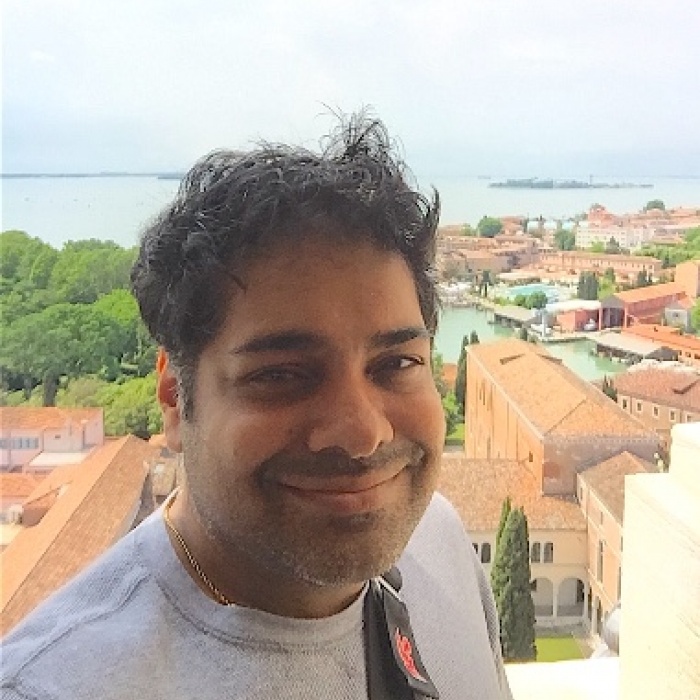
Manu Samriti Chander is Associate Professor of English at Rutgers University-Newark. He holds an MFA from the University of Michigan and a PhD from Brown University. His first monograph, Brown Romantics: Poetry and Nationalism in the Global Nineteenth Century (Bucknell, 2017), examined the appropriation of British Romantic tropes by colonial poets throughout the nineteenth century. He has also edited a collection of short fiction by the nineteenth-century Guyanese author, Egbert Martin (Caribbean Press, 2014), and co-edited, with Tricia A. Matthew, a special issue of European Romantic Review on generic experimentation in Romantic abolitionist literature. Professor Chander is currently working on The Collected Works of Egbert Martin, with the support of a Fulbright U.S. Scholar Grant, and developing a second monograph, Art Fights: Aesthetic Controversy and the Lessons of Modernity, which traces a trajectory from the controversial poems of Wordsworth and Coleridge to the films of Griffith and Kubrick and the novels of Nabokov and Rushdie. 

Keynote 1: Arini Loader

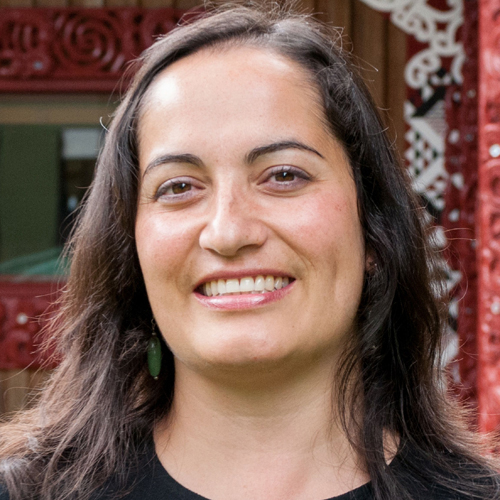
Arini Loader is a Lecturer in History at Victoria University of Wellington. Here’s Arini talking about her research: “My disciplinary background in Māori Studies enables me to dip my toes in a range of interconnected and overlapping scholarly fields. I am interested in narrative, prose & poetics, kōrero tuku iho, whakapapa, mōteatea, in the telling of stories on paper, marae & film, in archives, kitchens and at current events. My research is centered on te reo Māori texts written in the 19th century particularly but not limited to those of my own Ngāti Raukawa-Ngāti Toa Rangatira tūpuna. History, literature, and language are key threads in my kete mātauranga.”

Design a site like this with WordPress.com
Get started